
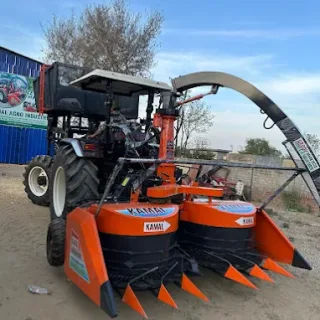
Price on request
Get best price
Forage (Silage) Harvester
1 product
Forage and silage harvesters are agricultural machines used to cut, chop, collect, and prepare green fodder crops for livestock feed and silage production. These machines are important for dairy farms, livestock operations, fodder growers, and farm contractors that need timely harvesting of crops such as maize, sorghum, grasses, legumes, and mixed forage crops. Proper harvesting helps preserve feed quality, improve chopping consistency, and support better silage storage.
On Farm Associate, buyers can explore forage and silage harvester options suitable for different farm sizes, crop types, cutting requirements, and feed preparation systems. Farmers can compare harvesting capacity, chopping mechanism, power requirement, field suitability, maintenance needs, and supplier availability before making an enquiry. This category connects global farm buyers with suppliers offering practical forage harvesting equipment for efficient fodder management and livestock feed preparation.
Frequently asked questions
What is a forage harvester used for?
A forage harvester is used to cut and chop green fodder crops for livestock feed, silage making, or farm feed storage. It helps farmers harvest crops such as maize, sorghum, grasses, and legumes more efficiently than manual cutting. The machine prepares chopped material that is easier to transport, compact, and store. This makes it useful for dairy farms, livestock farms, fodder growers, and harvesting contractors.
What is the difference between a forage harvester and a silage harvester?
A forage harvester and a silage harvester are closely related machines used for harvesting fodder crops. A forage harvester focuses on cutting and chopping green forage, while the term silage harvester is often used when the chopped crop is intended for silage storage. Both machines help prepare uniform chopped material for feeding or preservation. The selection depends on crop type, chop size requirement, and feed management system.
How does a silage harvester work?
A silage harvester works by cutting the standing fodder crop, feeding it into a chopping system, and discharging the chopped material into a trailer or collection setup. The chopping mechanism reduces the crop into small pieces suitable for compaction and storage. Proper adjustment of cutting height, chop length, and discharge direction helps improve harvesting efficiency. Farmers should match the machine settings with crop moisture and silage preparation needs.
Which crops can be harvested with forage harvesters?
Forage harvesters can be used for several fodder crops, including maize, sorghum, grasses, legumes, green cereal fodder, and mixed forage crops. The exact suitability depends on crop height, stem thickness, moisture level, and machine design. Farmers should choose a harvester that matches their main feed crop and required chop quality. Correct crop-machine matching improves harvesting speed, feed quality, and storage performance.
What are the main benefits of using a forage harvester?
The main benefits of using a forage harvester are faster harvesting, uniform chopping, reduced labour dependency, and better fodder handling. It helps farmers harvest crops at the right growth stage, which supports feed quality and silage value. Uniform chopped forage is easier to compact, store, and feed to livestock. A suitable harvester also improves field efficiency and reduces crop losses during handling.
Does a silage harvester improve feed quality?
A silage harvester supports better feed quality by helping farmers harvest forage at the right stage and chop it uniformly. Consistent chop size improves compaction during silage making, which supports proper fermentation and storage. Feed quality also depends on crop maturity, moisture level, packing method, and storage management. Farmers should combine correct harvesting with good silage handling practices for better results.
What should buyers check before purchasing a forage harvester?
Buyers should check crop suitability, cutting width, chop length control, power requirement, discharge system, field capacity, maintenance access, and spare part availability before purchasing a forage harvester. Tractor compatibility and field layout are also important. For commercial use, buyers should compare durability, daily output, service support, and operating cost. A well-matched machine improves harvesting efficiency and long-term performance.