
Irrigation Water Testing: A Practical Sampling Checklist
· 5 min read
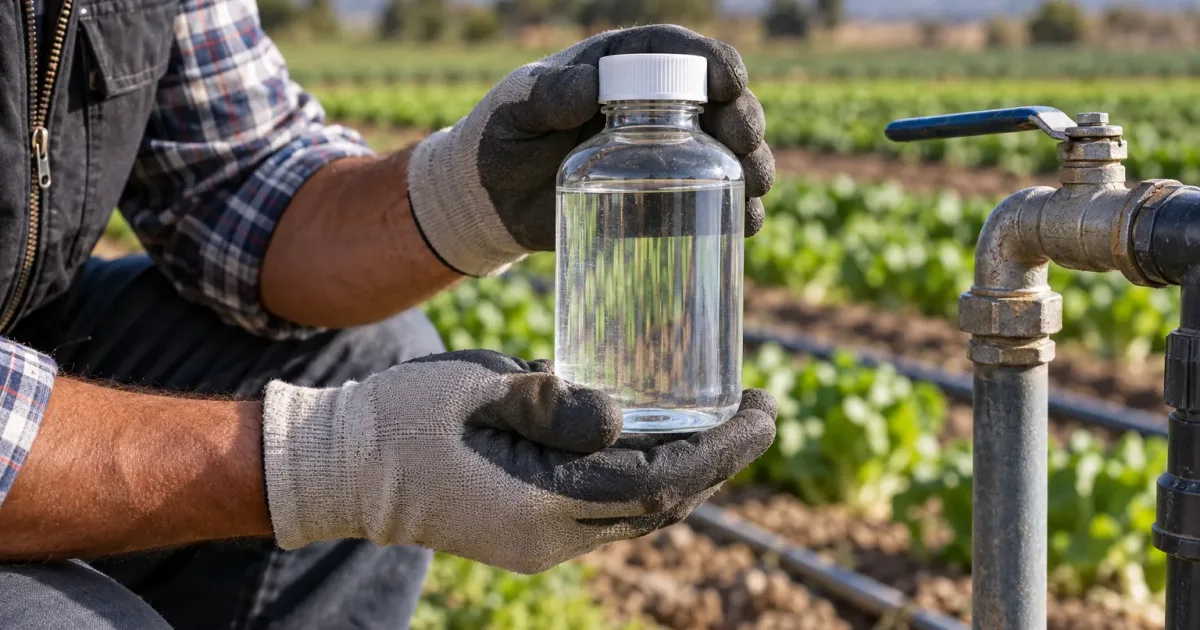
Plan irrigation water testing with a sampling checklist, lab questions and record template, so your results are useful for crop and supplier discussions.
Irrigation water testing is more useful when the sample answers a clear question. Are you checking a new water source, investigating crop problems or comparing water before and after treatment? Decide that before collecting a bottle.
This practical checklist helps farmers and growers organise the laboratory request, sampling details and records needed for a meaningful discussion. The receiving laboratory’s instructions should guide the actual collection method.
Define the purpose of irrigation water testing
Write a one-sentence reason for the test. For example: “We want to assess water from the new borewell for our vegetable irrigation system.” Add the crop, growing system and intended use of the results.
Penn State’s Agricultural Analytical Services Laboratory describes irrigation testing as useful for investigating water-related problems and assessing nutrients supplied through fertigation. Different questions may require different packages, so a general water test is not automatically the right test.
A crop chemistry assessment also does not establish drinking-water safety or microbial suitability for produce contact. Tell the laboratory if those are part of your question so it can specify the appropriate analyses.
Contact the laboratory before collecting
Ask which package fits your purpose and request its current sampling instructions. Confirm the container, sample volume, collection point, storage conditions and delivery deadline. Some tests require a supplied bottle or particular handling.
Do not assume you should rinse every bottle. Instructions for a clean bottle used in a routine chemistry test can differ from those for a sterile or preserved container. Utah State Extension notes that sampling methods depend on the constituents being tested and the water source.
Book collection around laboratory opening and courier arrangements. A carefully collected sample is less useful if it arrives outside the required holding time.
Choose a sample point that matches the question
Identify whether you are sampling source water, water after filtration, or water delivered through the irrigation system. These are distinct locations. If you need a comparison, assign separate sample identifiers and follow the laboratory’s plan for each.
Record any fertilizer injection or treatment operating at collection. A sample taken during fertigation should not be labelled simply as untreated source water. Keep samples from different locations or dates separate unless the laboratory explicitly specifies otherwise.
Use a collection record
Prepare the labels and submission form before visiting the sampling point. The following template helps keep the bottle and paperwork connected.
| Field | What to record |
|---|---|
| Sample ID | A unique code matching the bottle and form |
| Source | Well, surface source, stored water or other description |
| Collection point | Location relative to filtration and treatment |
| Date and time | Actual collection date and time |
| System status | Running conditions and any fertilizer injection |
| Crop and purpose | Intended use and reason for testing |
| Handling | Storage and transport details required by the lab |
Follow the lab’s directions for flushing, filling and closing the container. Avoid contaminating the inside of the cap or bottle. Retain a copy of the completed form and confirm the sample has arrived.
Ask what the results mean for your system
Common irrigation chemistry packages may include pH, alkalinity, electrical conductivity and selected ions. Confirm the actual package rather than assuming every laboratory includes the same measurements.
Read the units and interpretation notes with an adviser who understands your crop and growing system. Do not treat pH and alkalinity as interchangeable results or apply a threshold from a different production system without checking its relevance.
If treatment is proposed, ask what evidence supports it, what follow-up measurements are needed and whether equipment specifications must change. A report should support a defined decision rather than trigger an unplanned product purchase.
Prepare a useful supplier discussion
When discussing irrigation equipment, share the relevant report with the supplier and describe the water source, crop, existing filtration and operating conditions. Ask which additional specifications are needed before recommending equipment.
Browse Farm Associate’s agricultural listings and confirm availability and suitability directly with suppliers. Keep a maintenance record alongside laboratory findings.
Frequently asked questions
Can clear-looking water still need testing?
Yes. Appearance cannot establish the chemical or microbial properties relevant to your intended use.
Can I use an empty drinking-water bottle?
Ask the receiving laboratory first. Some routine chemistry methods accept a clean container, while other analyses need a supplied or specially prepared bottle.
Should I rinse the sampling bottle?
Follow the laboratory’s instructions. Do not rinse a sterile or preserved bottle unless the laboratory specifically directs it.
Can I combine water from two sources?
Keep the sources separate unless the laboratory designs a specific sampling plan. Mixing can obscure which source produced the result.
Does a handheld pH reading replace a laboratory report?
It only measures the parameter and conditions covered by that instrument. It does not replace other analyses required to answer your question.
How often should I retest?
Agree a schedule based on source variability, crop needs, system changes and the purpose of testing. There is no single interval suitable for every farm.
Make the sample traceable and the question clear
Start with the decision you need to make, follow the laboratory’s method and preserve the collection record. You will then have better information for crop advice and supplier discussions. Explore Farm Associate when preparing a detailed irrigation inquiry.
Sources
Need a supplier for this?
Tell us what you need. We will connect you with a supplier that serves your area.