Price on request
Get best price
Transplanters
3 products
- Price on requestGet best price
- Price on requestGet best price
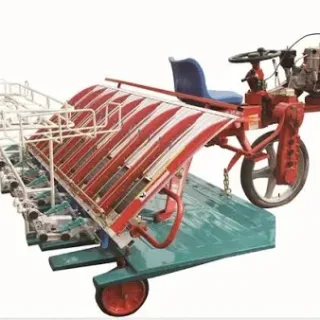
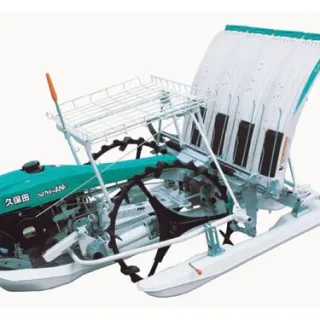
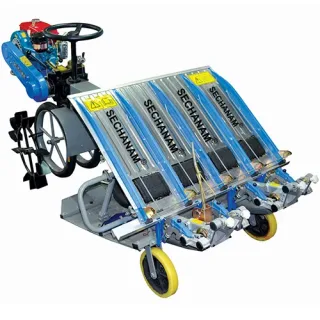
Transplanters are agricultural machines used to place seedlings into prepared soil with accurate spacing, depth, and row alignment. These machines help farmers reduce manual planting labour, improve field uniformity, and complete transplanting work faster during critical crop establishment stages. Transplanters are commonly used for crops such as rice, vegetables, tobacco, nursery-raised crops, and other crops that require seedlings to be shifted from nursery beds or trays into the main field.
On Farm Associate, buyers can explore transplanter machines suitable for small farms, commercial farms, nursery operations, vegetable growers, paddy farms, and farm contractors worldwide. Farmers can compare planting capacity, row spacing, seedling compatibility, field suitability, power requirement, maintenance needs, and supplier availability before making an enquiry. This category connects global farm buyers with suppliers offering practical transplanting equipment for better crop establishment and efficient planting operations.
Frequently asked questions
What is a transplanter used for?
A transplanter is used to plant young seedlings into the main field with proper spacing, depth, and row alignment. It reduces the need for manual transplanting and helps farmers complete planting faster. Transplanters are commonly used for paddy, vegetables, nursery-raised crops, and other crops that require seedling placement. A suitable machine supports better crop establishment, uniform plant growth, and easier field management.
How does a transplanter machine work?
A transplanter machine works by picking seedlings from a tray, mat, or feeding system and placing them into the soil at fixed intervals. The machine controls plant spacing, planting depth, and row alignment depending on its design. Some machines operate in wet fields, while others work on prepared dry beds. Proper seedling preparation and field condition are important for smooth transplanting and uniform crop placement.
Which crops can be planted using transplanters?
Transplanters can be used for crops such as rice, vegetables, tobacco, nursery-raised horticulture crops, and selected row crops that are grown from seedlings. Crop suitability depends on seedling size, root structure, tray format, soil condition, and machine design. Farmers should select a transplanter that matches their crop type and planting method. Correct matching improves seedling survival and field uniformity.
What are the main benefits of using transplanters?
The main benefits of using transplanters are faster planting, reduced labour dependency, uniform spacing, accurate planting depth, and better crop establishment. These machines help farmers complete transplanting on time during important planting windows. Uniform planting also improves sunlight exposure, airflow, irrigation efficiency, and later crop management. A suitable transplanter supports better field productivity and reduces manual planting stress.
Are transplanters useful for vegetable farming?
Transplanters are useful for vegetable farming when crops are raised in nurseries and shifted to the main field. They help place seedlings at consistent spacing and depth, which supports uniform growth and easier intercultural operations. Vegetable growers can use transplanters to save labour, reduce planting time, and improve crop row alignment. Buyers should check seedling tray compatibility and bed preparation requirements before purchase.
What is the difference between direct seeding and transplanting?
Direct seeding places seeds directly into the field, while transplanting places already-grown seedlings into prepared soil. Transplanting gives crops an early start and helps farmers manage plant population more accurately. It is useful when seedlings need nursery care before field establishment. Direct seeding can reduce nursery work, but transplanting often provides better control over spacing, plant stand, and early crop growth.
What should buyers check before purchasing a transplanter?
Buyers should check crop suitability, seedling size compatibility, row spacing, planting depth control, field capacity, power requirement, handling ease, maintenance access, and spare part availability before purchasing a transplanter. They should also confirm whether the machine suits wet fields, dry beds, or raised-bed farming. A proper match between machine, seedlings, and field condition improves transplanting performance.