
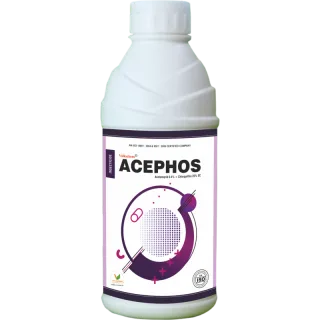
Price on request
Get best price
Pesticide
8 products
- Price on requestGet best price
- Pesticide
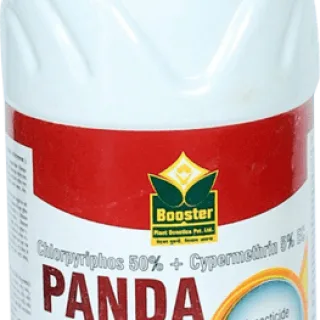
Panda Super - Chloropyriphos 50 % + EC Cypermethrin 5% EC
Booster Plant Genetics Pvt. Ltd. · Chhatrapati Sambhajinagar, Maharashtra
Price on requestGet best price - Price on requestGet best price
- Pesticide
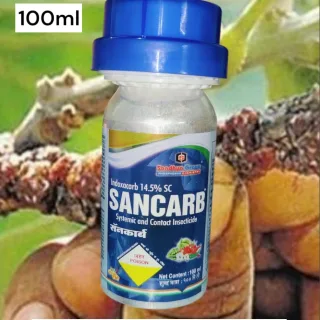
Sancarb (Indoxacarb 14.5%)
Priya Agrico (प्रिया ऐग्रीको) - Seeds | Pesticide | Sprayers | Foggers | Fertilizers | Gardening Tools | Farming Machinery · Ranchi, Jharkhand
Price on requestGet best price - Price on requestGet best price
- Pesticide
Acephate 50% + Imidaclopride 1.8% SP – Atlas Gold
Hindustan crop science · Nanded, Maharashtra
Price on requestGet best price - Price on requestGet best price

A pesticide is a substance or mixture used to prevent, control, or eliminate pests that damage crops — including insects, fungal and bacterial diseases, weeds, mites, nematodes, and rodents. Pesticides are classified primarily by the type of pest they target. Insecticides control insect pests such as caterpillars, aphids, borers, and beetles. Fungicides protect crops against fungal and bacterial diseases such as blights, mildews, rusts, and rots. Herbicides, also called weedicides, control unwanted weeds that compete with crops for light, water, and nutrients. Other categories include rodenticides for rodents, miticides or acaricides for mites, and nematicides for soil-dwelling nematodes. Pesticides are also classified by how they act on the pest. Contact pesticides work on the pest or pathogen they directly touch, requiring thorough coverage of the crop surface. Systemic pesticides are absorbed and moved within the plant, protecting tissue the spray did not directly reach and offering longer-lasting protection. Products are further described by their mode of action — the specific biological process they disrupt — which is the key to managing resistance. Choosing the right pesticide means matching the product type, mode of action, and formulation to the specific pest, the crop, and the stage of the problem, always within the limits of the product's registered label.
Frequently asked questions
What is a pesticide?
A pesticide is a substance or mixture used to prevent, control, or eliminate pests that damage crops, including insects, fungal and bacterial diseases, weeds, mites, nematodes, and rodents. Pesticides are classified by the pest they target: insecticides control insects, fungicides control diseases, herbicides (weedicides) control weeds, and other types such as rodenticides, miticides, and nematicides address specific problems. They are also classified by how they act — contact products work where they touch the pest, while systemic products are absorbed and moved within the plant. Used responsibly and within label directions, pesticides are an essential tool for protecting crops and securing yields.
What are the main types of pesticides?
Pesticides are grouped mainly by their target pest. Insecticides control insect pests such as caterpillars, aphids, and borers. Fungicides protect crops against fungal and bacterial diseases like blights, mildews, rusts, and rots. Herbicides, also called weedicides, control weeds that compete with crops for resources. Other categories include rodenticides for rodents, miticides or acaricides for mites, and nematicides for soil-dwelling nematodes. Pesticides are further classified by mode of action and by whether they are contact or systemic. Choosing the right type means matching the product to the specific pest, the crop, and the stage of the problem, always within the product's registered label.
What is the difference between an insecticide, a fungicide, and a herbicide?
The three differ by the type of pest they control. An insecticide targets insect pests such as caterpillars, aphids, beetles, and borers that feed on or damage crops. A fungicide targets fungal and bacterial diseases — such as mildews, blights, rusts, and leaf spots — protecting the plant from infection. A herbicide, also called a weedicide, targets unwanted weeds that compete with the crop for light, water, and nutrients. They are not interchangeable: using the wrong type will not control the problem and may waste money or harm the crop. Correctly identifying whether you face an insect, a disease, or a weed is the essential first step in choosing the right product.
What is the difference between a contact and a systemic pesticide?
Contact and systemic pesticides differ in how they reach and act on the pest. A contact pesticide works on the pest or pathogen it directly touches, so it requires thorough, even coverage of the crop surface to be effective, and it generally only protects the parts it lands on. A systemic pesticide is absorbed into the plant and moves through its tissues, protecting areas the spray did not directly reach — including new growth — and offering longer-lasting protection that is less dependent on perfect spray coverage. Contact products often act quickly, while systemic products provide more durable, distributed protection. Many programmes use both, choosing according to the pest, the crop, and the situation.
What is the difference between a pesticide and a biopesticide?
A pesticide, in the conventional sense, is typically a synthetic chemical product that controls pests through chemical action, often acting quickly and across a broad range of targets. A biopesticide is based on living organisms or naturally occurring biological substances — such as microbial agents or pheromones — and controls pests through specific biological mechanisms, usually with a narrower, more targeted spectrum and lower residues. Conventional pesticides offer fast, broad, reliable control, while biopesticides offer target specificity, novel modes of action useful for resistance management, and low residues. Many modern programmes integrate both within integrated pest management, using each where it is most effective and appropriate.
How do I use pesticides safely?
Safe pesticide use starts with reading the product label in full before purchase and application — it specifies the approved crops, target pests, correct rate, timing, safety precautions, and the pre-harvest interval. Always apply at the labelled rate; never exceed it. Wear the personal protective equipment specified on the label, and follow all handling, mixing, and storage instructions. Apply under suitable weather conditions to avoid spray drift onto neighbouring crops, people, or water. Observe the pre-harvest interval so residues stay within safe limits. Store pesticides securely, away from food, feed, and children, in their original labelled containers. Following the label and local regulations protects the applicator, consumers, and the environment.
What is a pre-harvest interval (PHI)?
A pre-harvest interval, or PHI, is the minimum amount of time that must pass between the last application of a pesticide and the harvest of the crop. It is set for each pesticide and crop combination and stated on the product label. Observing the PHI ensures that pesticide residues on the harvested produce have declined to within the legal maximum residue level (MRL), keeping the food safe to eat and compliant with market requirements. Harvesting before the PHI has elapsed can leave residues above safe limits, risking rejection of the produce by buyers, processors, or export markets. Always check and respect the PHI on every product you apply.